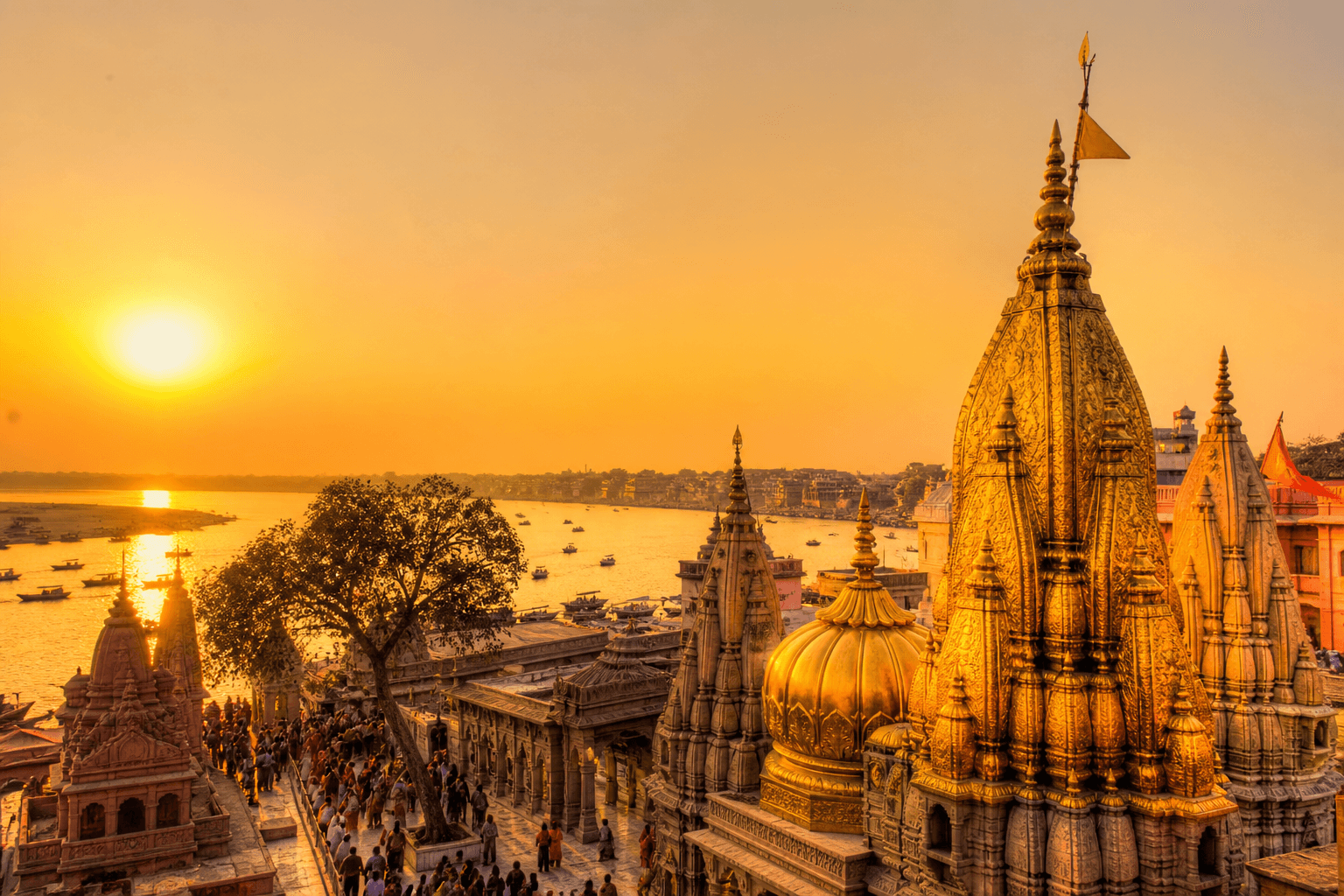
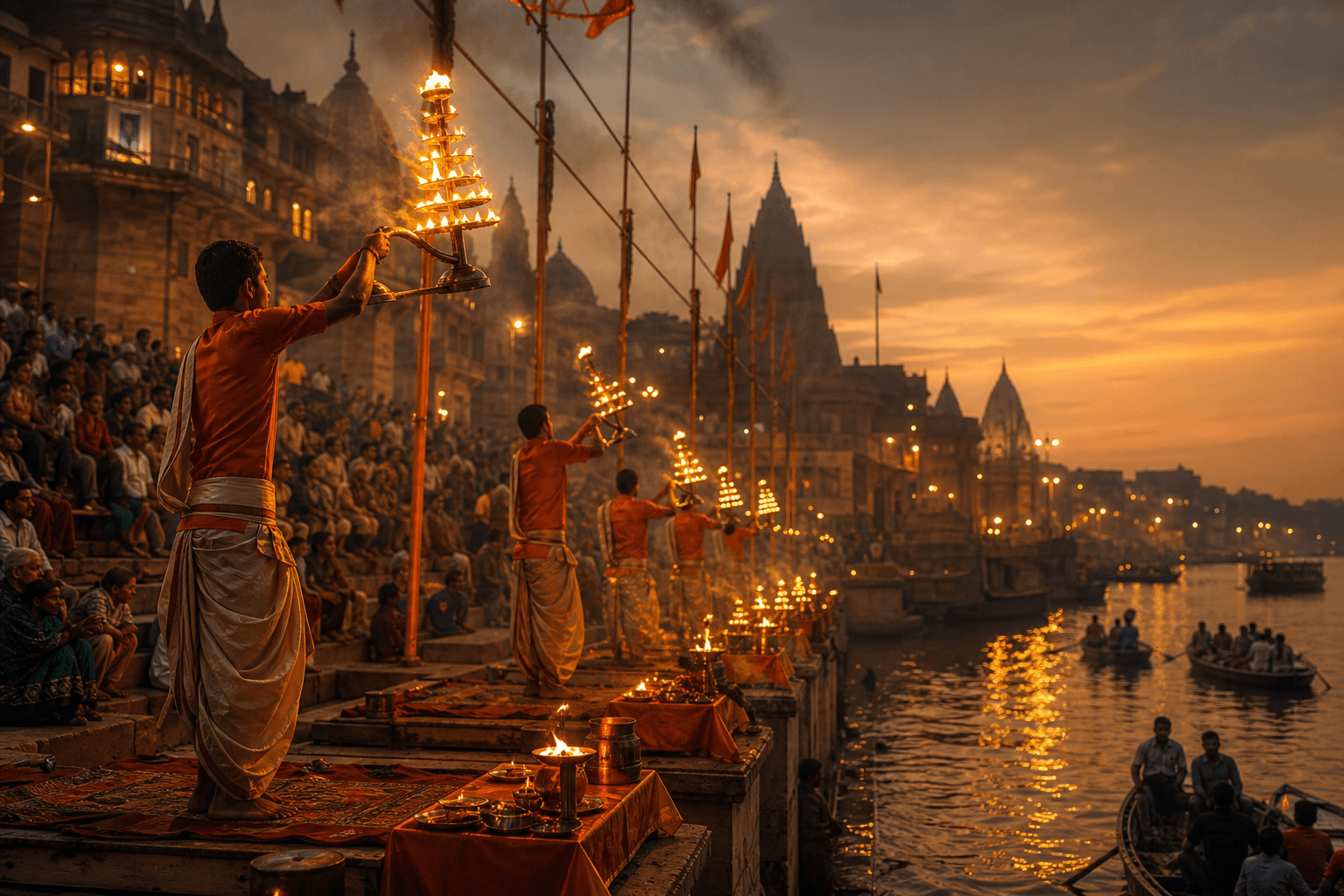
The main ghat for the famous evening Ganga aarti — brass lamps, conch shells, and the river at dusk.
The ghat that holds the city's evening flame
Dashashwamedh is the ghat most visitors picture when they say Varanasi: wide stone steps, boats rocking in the current, and at dusk a choreography of fire reflected on the Ganga. It sits between the old city's commercial heart and the cremation grounds of Manikarnika. Our Schedule 5 episode ends here — not because the story finishes, but because moksha and celebration share this stretch of river, and the aarti makes that sharing visible.
Ten horses and a throne of steps
Legends disagree on who performed the dash ashwa medh — the ten-horse sacrifice — that names the ghat. Some credit Brahma; others the Pandavas after the great war. What matters on the ground is continuity: kings and merchants funded repairs across centuries, and the ghat remained the city's ceremonial front door. The steps you climb today are the latest layer on a site that has welcomed pilgrims, poets, and sceptics without distinction.
The aarti as public prayer
Each evening, young priests in saffron rotate large brass lamps while mantras rise over the water. Conch shells, bells, incense — the senses fill before the mind catches up. The Ganga aarti ceremony is not a show separable from devotion; it is prayer performed where everyone can see. From the upper steps you hear the crowd breathe as one when the lamps lift. From a boat, you see the whole ghat become a line of light. Both perspectives belong in your first visit.
Daylight hours and the lanes behind
Come in the morning and Dashashwamedh belongs to bathers, laundry workers, and children skipping school near the water. The lane from Godowlia spills into the ghat with flower sellers, chai stalls, and the pressure of a city that lives inches from the river. Walk north toward Manikarnika to understand how fire and water coexist on one bank. Walk inland toward Kashi Vishwanath Temple when you are ready to trade the open river for the gold dome and the queue for darshan.
How to stand in the crowd and still see
There is no elegant way to describe the density of a high-season aarti. Shoulders touch. Voices layer. If you need stillness, watch from a boat or from the balconies of nearby guesthouses that face the ghat. If you want immersion, stand on the steps and accept that you are inside the ritual, not above it. Either choice is honest. Dashashwamedh does not reward the passive observer — it asks you to decide how close you will stand to the flame.
Visitor tips
- Reach forty-five minutes before aarti for a spot on the upper steps; the lower platform fills quickly
- Watch from a boat for a wide view — book early and confirm return time with your boatman
- Keep bags close in the crowd; the lane from Godowlia to the ghat is narrow and busy
- Photography is allowed on the steps but be mindful of pilgrims performing private rituals nearby
- For full river context north toward [Harishchandra Ghat](/destinations/varanasi/attractions/harishchandra-ghat), book the [84 ghats boat tour](/destinations/varanasi/experiences/eighty-four-ghats-boat-tour)
From the series
Films and upcoming schedules
Episode 1
Dusk at Dashashwamedh
Episode one opens on the ghats at golden hour — lamps, aarti and the eternal rhythm of Kashi.
Watch the episode →Episode 4 · Coming soon
Flames at Manikarnika
A planned docuseries episode tracing the ghat where cremation fires have burned without interruption for centuries.
Follow production →Docuseries Schedule 5
Dashashwamedh → Manikarnika
Planned — part of The Ghats of Varanasi, our 11-schedule cinema docuseries across 84 contiguous ghats.
View the docuseries pitch →Field notes
Stories from this stop
Banarasi breakfast map — kachori before the ghats
The city eats before the sun hits the river — a morning route through kachori, jalebi and the lanes that fuel pilgrimage.
Read the story →Monsoon Ganga — when the river becomes the story
July rain swells the Ganga past the steps — Varanasi transformed, dangerous, magnificent, and not for every traveller.
Read the story →Evening aarti from the boat
Watching Dashashwamedh aarti from mid-river — brass, smoke and a thousand phones lowered for a minute.
Read the story →Ghat etiquette — how to walk Kashi with respect
The steps belong to pilgrims, mourners, and the river — a practical guide to behaviour at Varanasi's most sacred edge.
Read the story →Old city food walk — a Banarasi breakfast map
Chaat lanes, lassi cups and the smell of ghee before the ghats fill — Varanasi eaten on foot.
Read the story →Smoke and silence at Manikarnika
Walking the cremation ghat at first light — where the city's noise falls away and the river keeps its oldest promise.
Read the story →Packages
Tours that include this stop
4 days · Showcase
Banarasi culture
Weaving houses, classical music evenings and old-city food walks.
View package →7 days · Showcase
Spiritual package
Ghat sunrise, temple darshan and guided ritual across the circuit.
View package →Visitor questions
Usually between 6:45 and 7:30 PM, shifting slightly with sunset through the year. Arrive early in winter when darkness falls sooner.