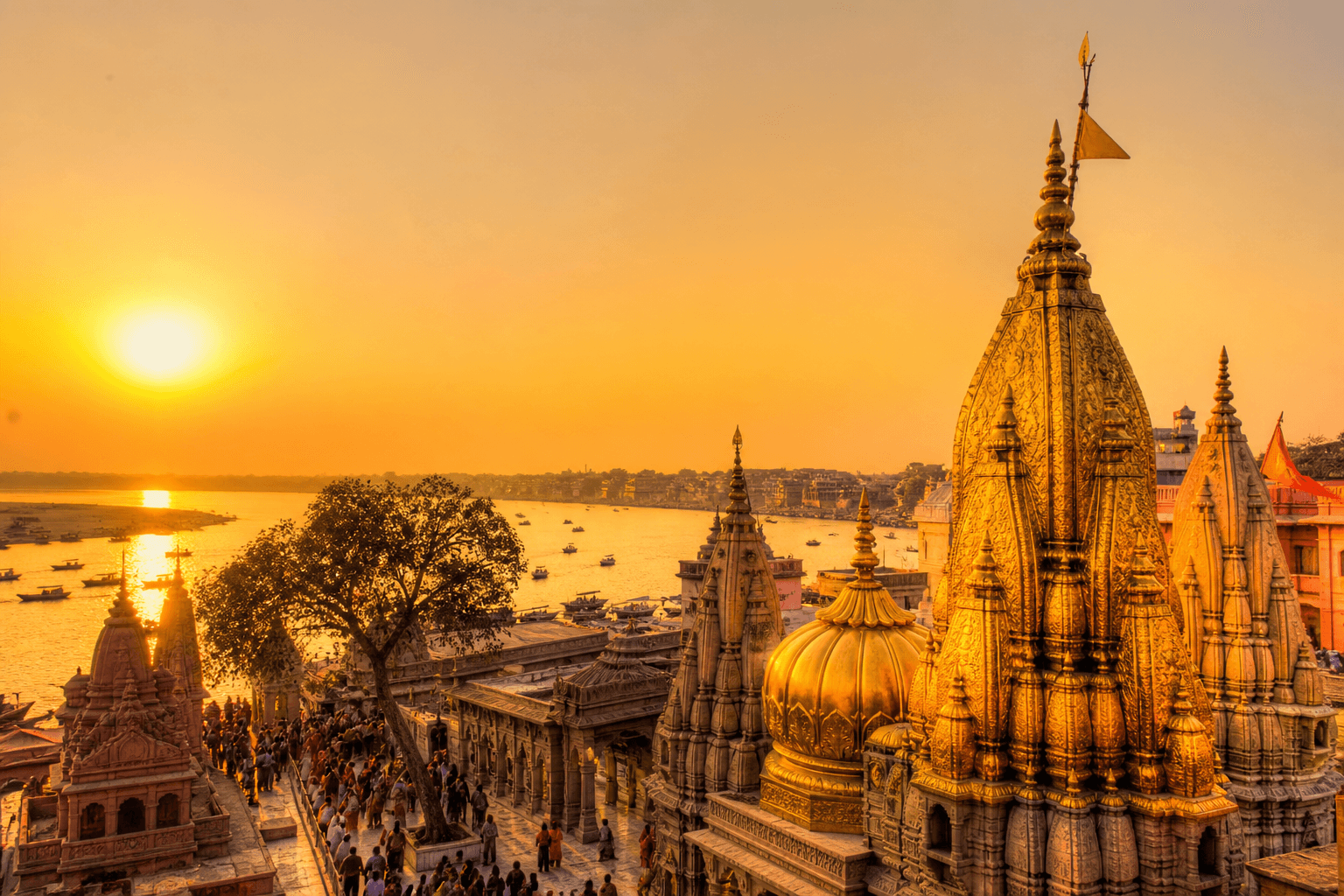
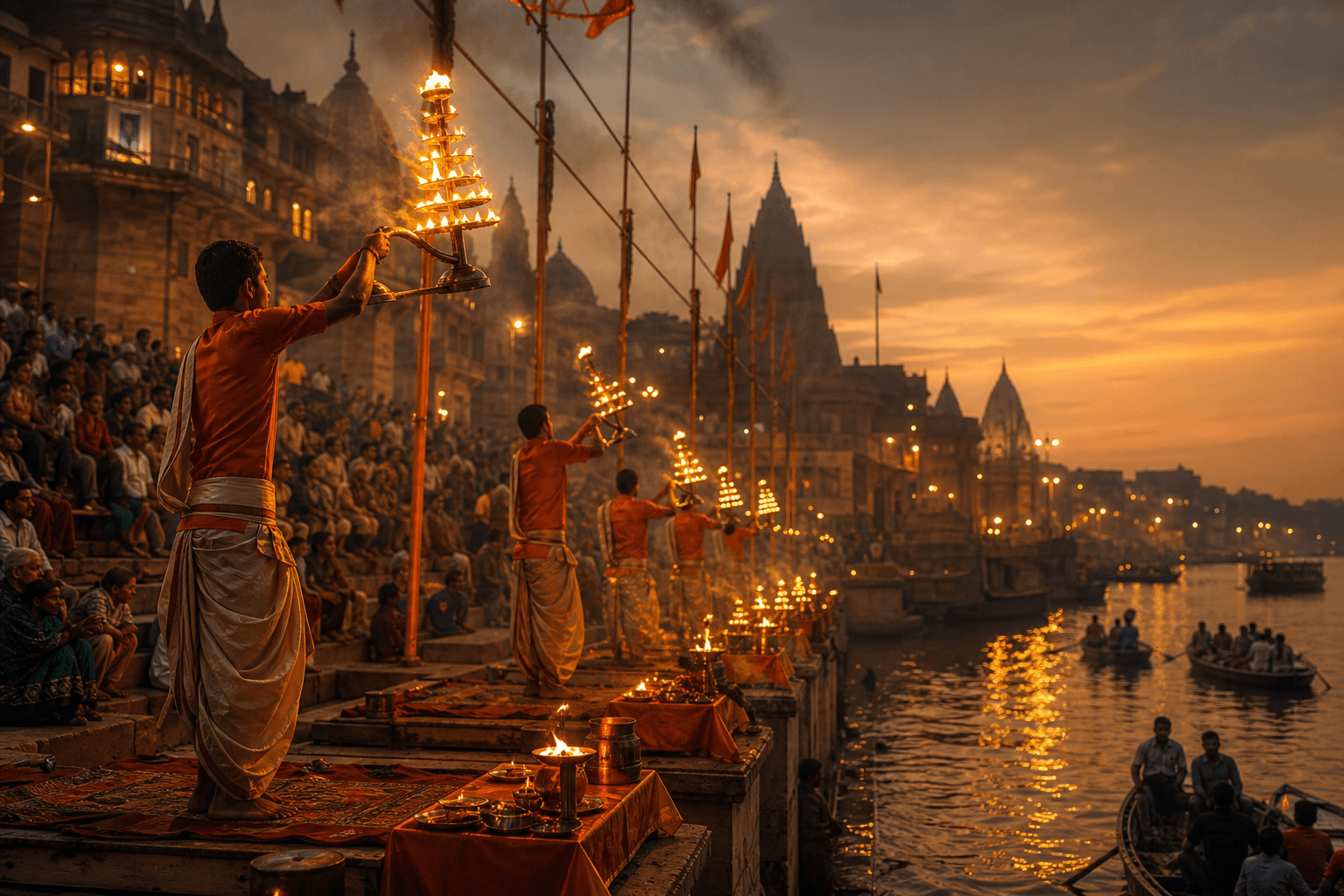
Shakti shrine beside the Vishwanath corridor — where the goddess of nourishment balances Shiva's ascetic Kashi.
Food as theology
Annapurna — "full of food" — stands in theological counterpoint to Kashi Vishwanath, where Shiva rules as ascetic lord of the city. Without Annapurna's grace, the myth says, even moksh would starve. The temple sits in the dense Vishwanath corridor where lanes narrow and devotion compresses into queue discipline. Pilgrims touch the goddess after touching Vishwanath because Kashi's promise is wholeness: liberation and daily bread, not one without the other.
History in the lane
The shrine carries medieval roots renewed through Maratha and modern patronage. Unlike the soaring shikhara of the new Vishwanath complex, Annapurna's scale feels neighbourhood-intimate — brass doors, oil lamps, the smell of rice prasad. Kashi government heritage listings group it among essential Shakti stops on any serious temple circuit.
Darshan rhythm
Morning aarti before household kitchens fire across the city; evening lamps when pilgrims return from ghats. Combine with Kaal Bhairav the same day if you are walking the protective deity circuit. Afternoon chaat at Kashi Chat Bhandar rewards fasting stomachs — Annapurna would approve the irony.
Respect and restraint
Do not photograph mourners or priests without permission. Queue patiently; corridor security is strict for good reason. If you are on a old city food walk, visit Annapurna before you eat — theology first, tamatar chaat second.
Visitor tips
- Visit after [Kashi Vishwanath](/destinations/varanasi/attractions/kashi-vishwanath-temple) darshan — the shrines are steps apart in the corridor zone
- Annapurna Jayanti (around Margashirsha) draws huge queues — arrive early or visit off-season
- Photography inside garbhagriha is prohibited; store phones per corridor rules
- Offerings of grain and cooked food are traditional — buy prasad from authorised counters only
Visitor questions
Tradition holds that Shiva once begged food in Kashi to honour the goddess — Annapurna represents the nourishment that sustains ascetic and householder alike.