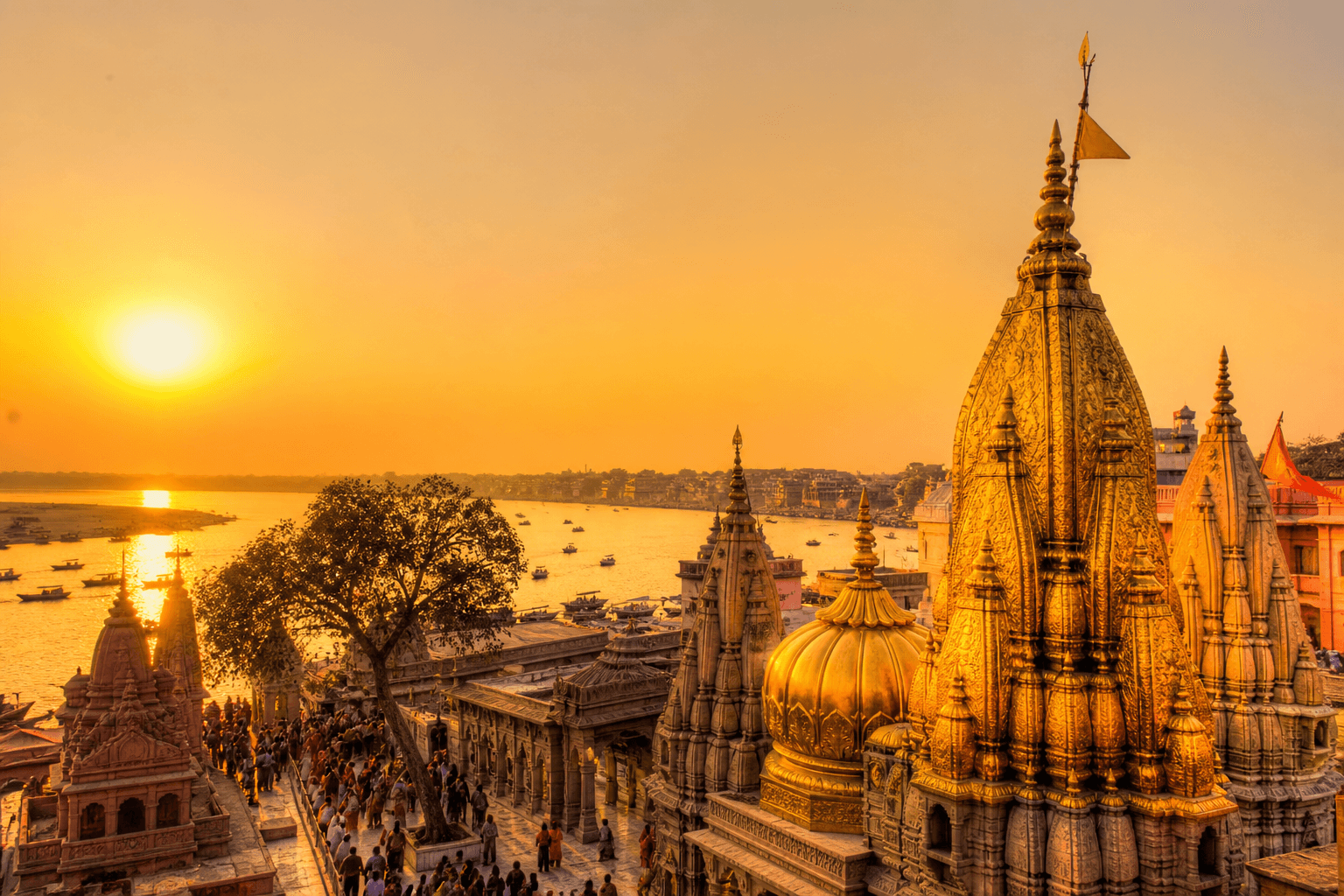
Rajput observatory on the Ganga — stone balconies, astronomical instruments, and the ghat Man Singh built for star-reading over the river.
Palace that measures stars
Man Mandir Ghat rises in ochre stone above the Ganga — not a humble bathing terrace but a Rajput statement imported from Amber to Kashi. Raja Man Singh's complex combined residence, temple, and observatory: balconies where priests once tracked celestial movement while cremation smoke drifted upstream from Manikarnika. From the river, the facade is one of Varanasi's most photographed profiles — symmetry, jharokha windows, the absurd beauty of astronomy built beside ash.
The observatory level
Jaipur's Jantar Mantar has a sister logic here on a smaller scale — instruments embedded in stone for reading sun and star positions. ASI maintenance means access varies; when open, the terrace offers river panoramas unmatched by lane-level walking. Even closed, the exterior rewards slow looking from a boat paused mid-current.
Ghat life below
Bathers, laundry, priests — the terrace spectacle does not pause daily ritual. Man Mandir sits between Dashashwamedh south and Manikarnika north on classical boat routes. Our docuseries Schedule 5 crew frames it as the moment architecture interrupts grief — gold stone against grey smoke.
How to visit
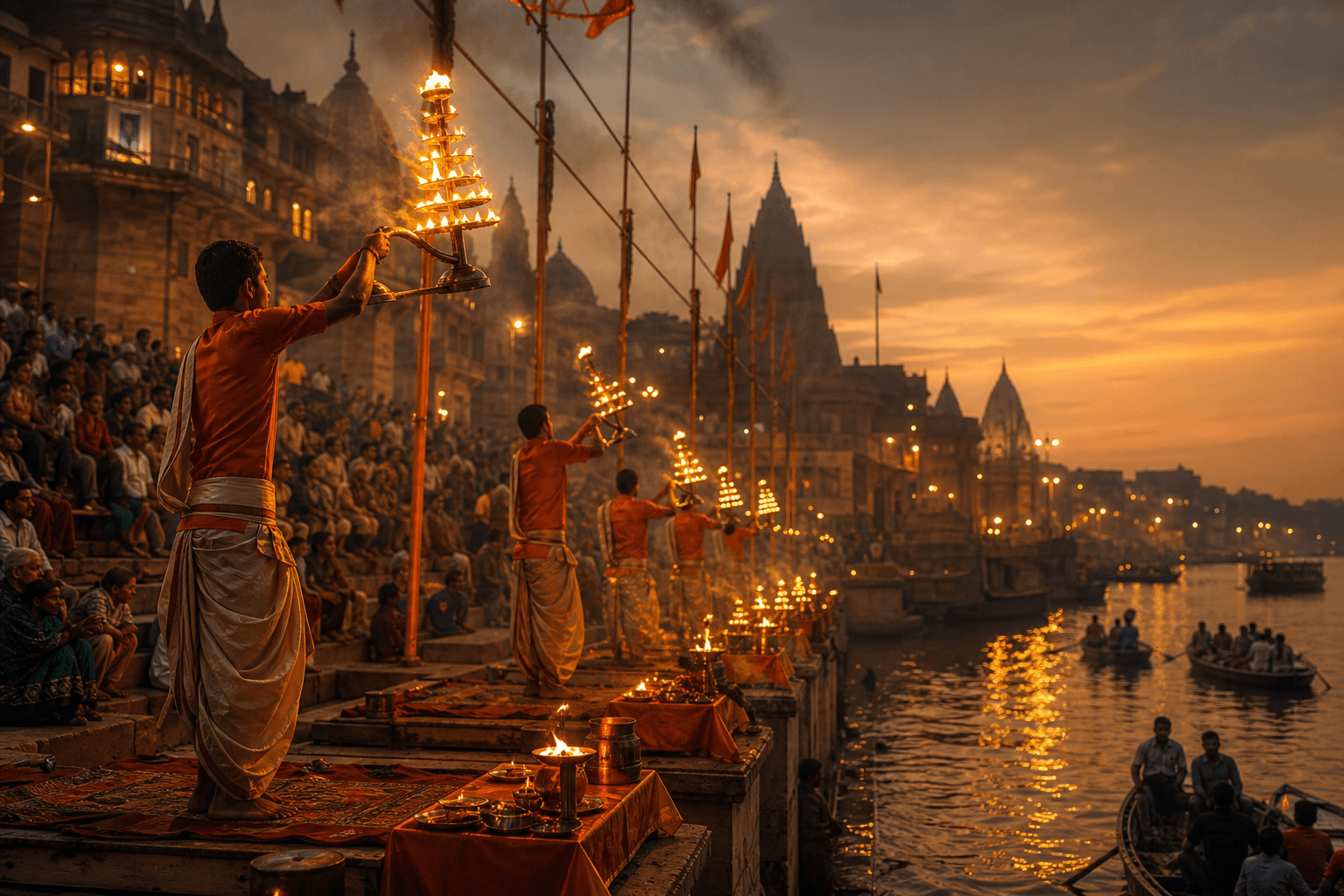
Walk the waterfront at dawn before crowds, or request a stop on Ganges boat ride routes. Evening Ganga aarti glow catches the palace walls if you boat back after lamps ignite downstream.
Visitor tips
- Best viewed from a boat on the [84 ghats tour](/destinations/varanasi/experiences/eighty-four-ghats-boat-tour) — facade reads complete from mid-river
- Observatory instruments are fragile — do not touch unless guides permit
- Climb carefully; stone steps are worn smooth by centuries of feet
- Pair with northward walk toward [Manikarnika](/destinations/varanasi/attractions/manikarnika-ghat) for ritual contrast
From the series
Films and upcoming schedules
Episode 5 · Coming soon
River of Ritual
A planned episode on boatmen, bathers, and the layered rites that unfold between Dashashwamedh and Manikarnika each dawn.
Follow production →Visitor questions
Raja Man Singh of Amber (Jaipur) in the early seventeenth century — part of Rajput patronage that reshaped Kashi's riverfront palaces and temples.