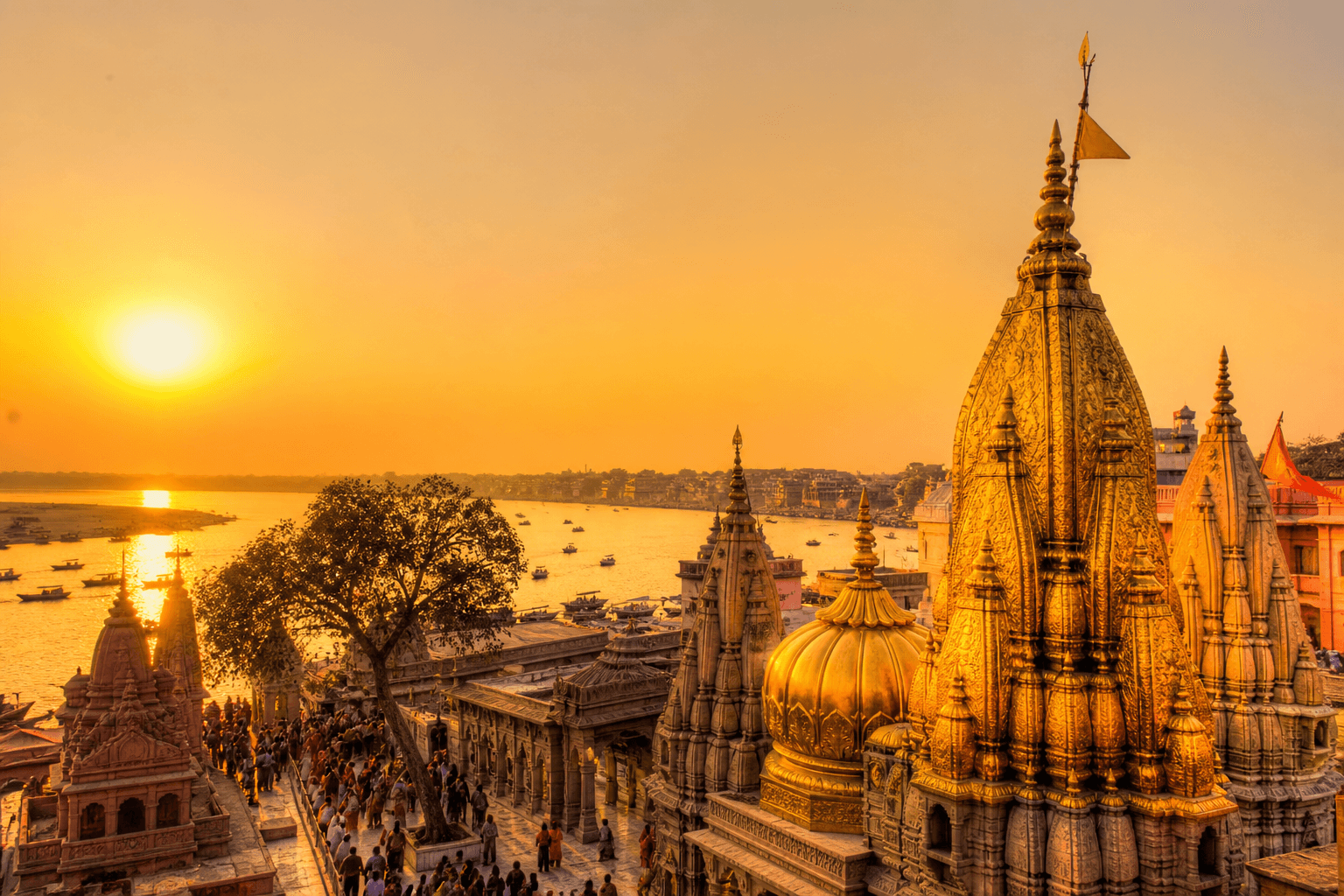
A 1,300-acre campus — sandstone arches, the Vishwanath temple replica, and student life south of the old city.
A city inside the city
Banaras Hindu University spreads across more than a thousand acres — sandstone faculties, banyan shade, cycling students, and the hum of a town that happens to issue degrees. Founded in 1916 by Madan Mohan Malaviya with Annie Besant's support, BHU was imagined as a bridge between Sanskrit learning and modern science. Heritage here is institutional: arches that echo Rajput and Indo-Gothic tastes, lawns where political speeches once competed with peacocks.
New Vishwanath and the museum
The campus New Vishwanath Temple — often called Birla Temple — offers white marble calm and shorter queues than Kashi Vishwanath in the old city. Nearby, Bharat Kala Bhavan collects sculpture, textiles, and miniature paintings that contextualise Banaras beyond the ghat steps. Allow a morning for temple and museum together; afternoons grow hot on open paths.
Student rhythm and visitor etiquette
BHU is lived-in, not a theme park. Avoid photographing hostels without permission; keep voices low near libraries and examination halls. The southern gate connects toward Assi Ghat — many students walk that route at dawn. Our docuseries films campus edges to show who shares the city with pilgrims: researchers, weavers' children on scholarship, athletes on the playing fields.
Contrasts that clarify Kashi
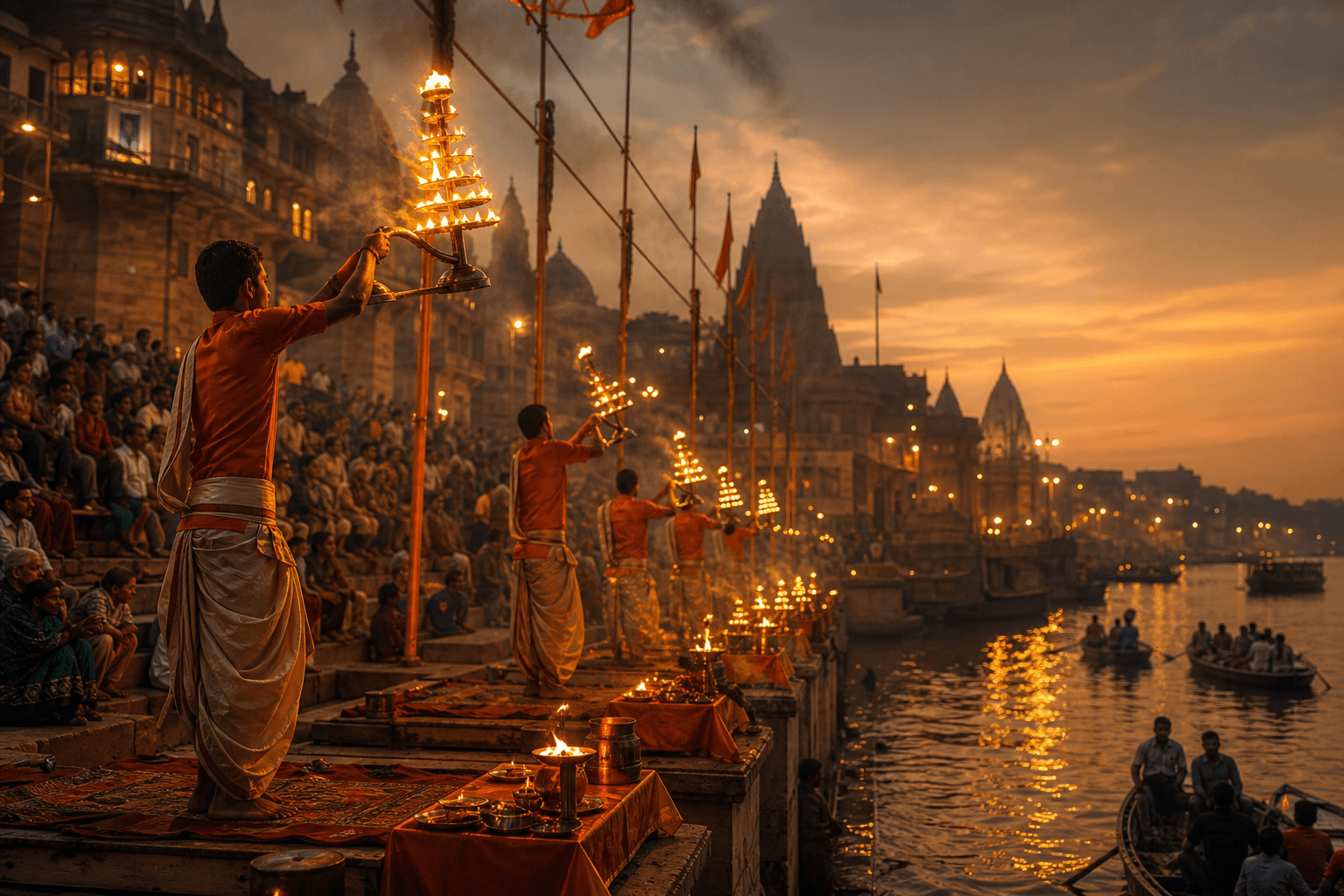
Pair BHU with Bharat Mata Temple for two twentieth-century answers to what modern India should look like — one a map on marble, one a lattice of faculties. Then return to the river for Ganga aarti and feel how the old city's ritual density sits beside this expanse of planned stone. Both are Varanasi. Neither is complete without the other.
Visitor tips
- Carry ID — campus security may register visitors at main gates
- Bharat Kala Bhavan museum holds sculpture and miniature paintings worth an hour
- New Vishwanath Temple (Birla Temple) on campus allows a calmer darshan than the old-city shrine
- Rent a cycle or use campus e-rickshaws — the grounds are too large to cover on foot in one visit
Visitor questions
Yes. The university welcomes visitors at designated gates. Dress modestly, especially near temples and hostels, and avoid disrupting classes.