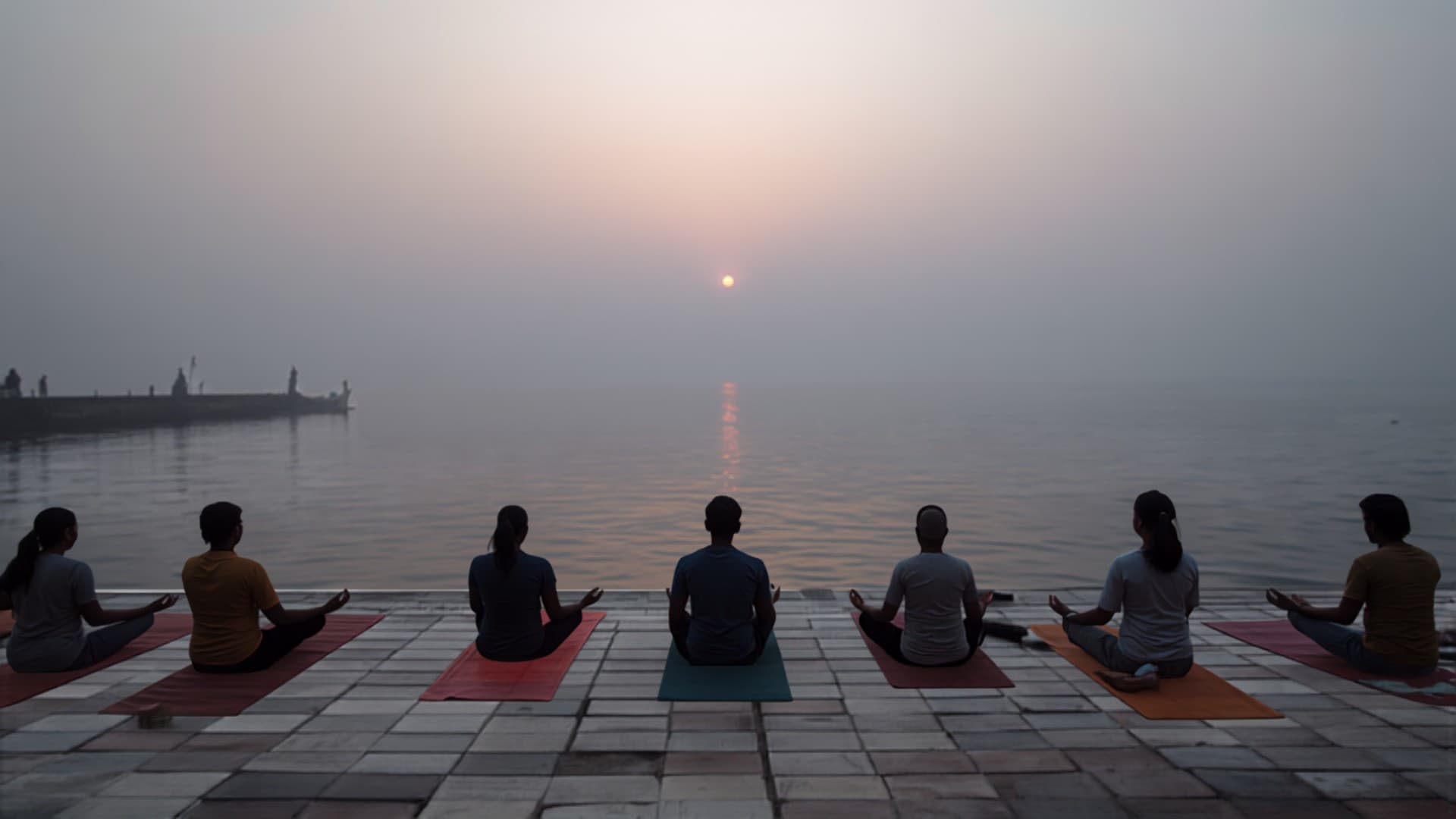
varanasi · 12 March 2026
Subah-e-Banaras diary
Yoga, mantra and river mist at Assi — the city's public morning before the lanes explode.
Read story →
Moksh · Varanasi · 8 March 2026
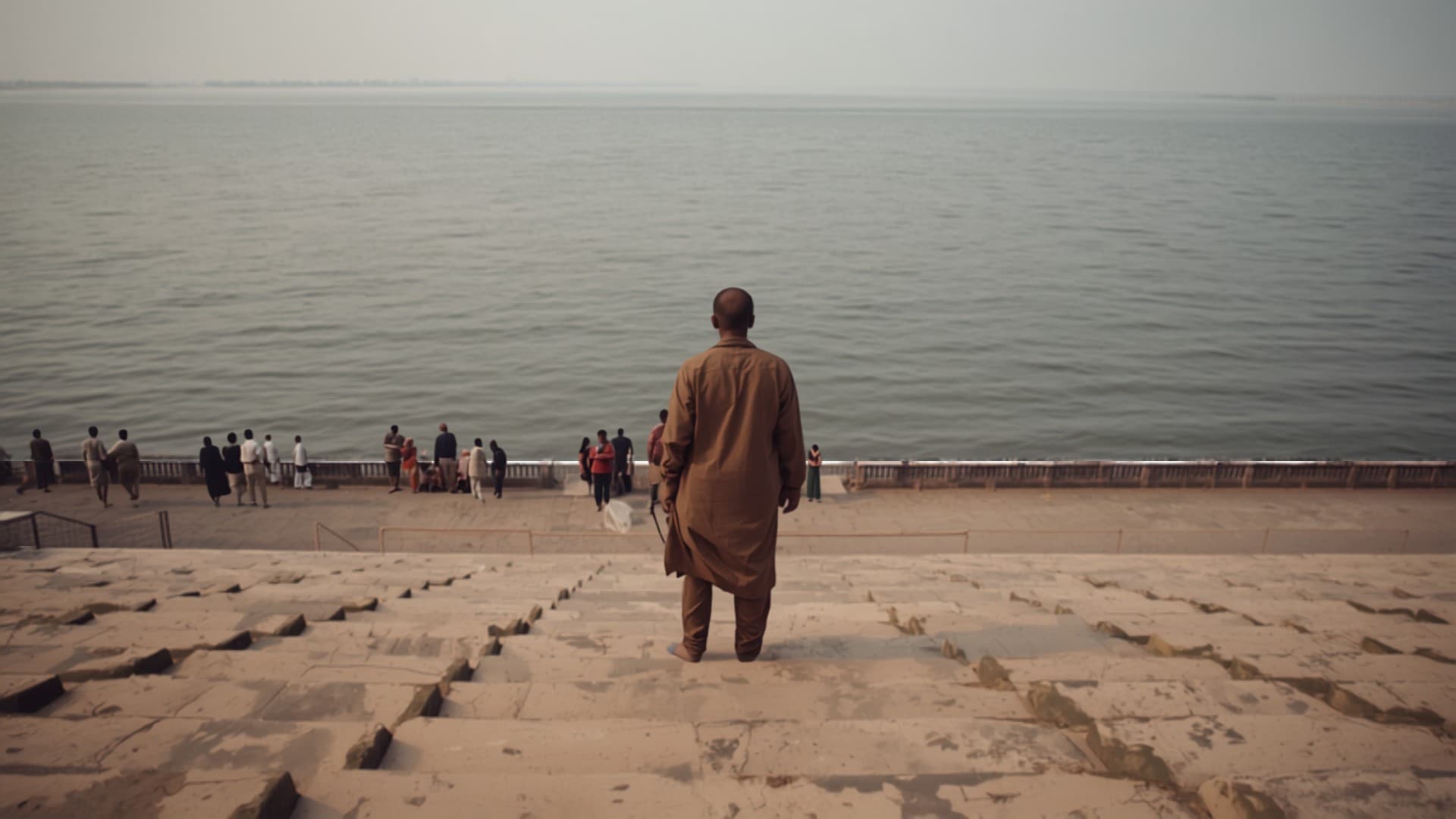
The steps belong to pilgrims, mourners, and the river — a practical guide to behaviour at Varanasi's most sacred edge.
Last season a man posed beside a pyre at Manikarnika Ghat. A relative asked him to stop. He did not understand the language but understood the face — and still tried one more shot while walking away.
Do not be that person.
The ghats are not a backdrop. Families travel for days to bring someone they love to the Ganga. Priests bathe. Widows sit. Vendors sell tea. Mourning happens in public because this city decided centuries ago that death belongs beside the river, not hidden in a ward.
Not every landing is the same. Dashashwamedh Ghat hosts the famous aarti and dense evening crowds — photography is common, though still not an excuse to block ritual or shove lamps aside for an angle.
Manikarnika Ghat and Harishchandra Ghat are active cremation grounds. Treat them like churches during a funeral: no posed photos, no flash, no walking through ceremonies for a shortcut. Put the camera away entirely unless a dom or family explicitly invites otherwise — and that invitation is rare.
If you are unsure which ghat you stand on, ask a boatman or guide before you shoot. Ignorance is forgivable once; after that it is choice.

Modest clothing helps everywhere near temples and ghats — covered shoulders and knees are baseline respect, not costume. Remove shoes where locals remove shoes. Do not step over offerings, lamps, or seated pilgrims.
If you bathe in the Ganga, follow local custom: often a dip, not a swim; often modest wrap; never soap or detergent in the water. The river is goddess and utility simultaneously; behave as though both truths matter.
Boat negotiations belong on the water, not on cremation steps. Tip fairly; do not haggle beside a pyre as though the smoke were ambient décor.
Real awe in Kashi is quiet feet and a lowered voice. It is watching without claiming. It is letting the city be older than your Instagram.
We film here with permits, distance, and long relationships with dom families. Casual visitors have no such licence. Your best footage is often memory — the image that stays because you did not steal it.
If children approach selling flowers or floating diyas, buy if you wish — but do not treat their labour as your moral theatre. Tip boatmen fairly; do not perform generosity for an audience on the steps.
Walk the moksh corridor with us in spirit: dawn boat, mid-morning temple, cremation ghats only if you are prepared to receive, not consume. Our directory maps every landing; our guides know which hours fill and which lanes offer escape when you need air.

Kashi rewards preparation. It punishes entitlement with a shame you will feel in the chest before you feel it in comments online.
When you want someone to walk the ghats beside you — timing, landings, the words to use and avoid — plan your trip and arrive ready to witness, not perform.
Plan your pilgrimage
Kashi rewards those who arrive with time and respect. Share your dates and we will help you build the rhythm — ghats, temples, and river — at your pace.
Plan your tripKeep reading
varanasi · 12 March 2026
Yoga, mantra and river mist at Assi — the city's public morning before the lanes explode.
Read story →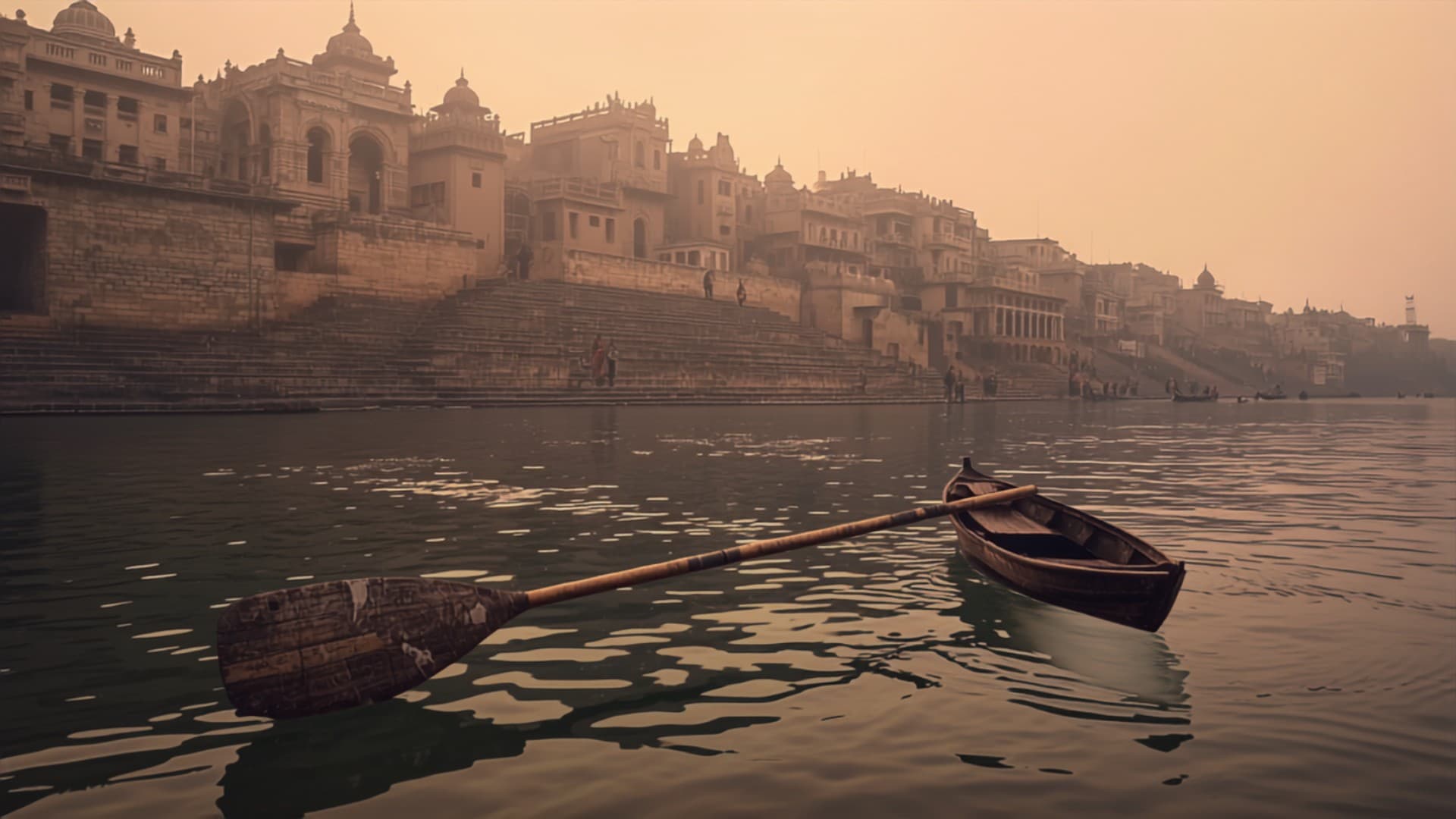
varanasi · 11 March 2026
From Assi to Raj Ghat by boat — how to read Varanasi's eighty-four landings as a single geography of faith.
Read story →Places in this story
linked stops
 attraction
Kashi's principal cremation ghat — where pyres burn beside the Ganga and liberation is sought through fire.
Explore →attractionKashi's southern cremation ground — named for the truthful king, where pyres burn with the same finality as Manikarnika.
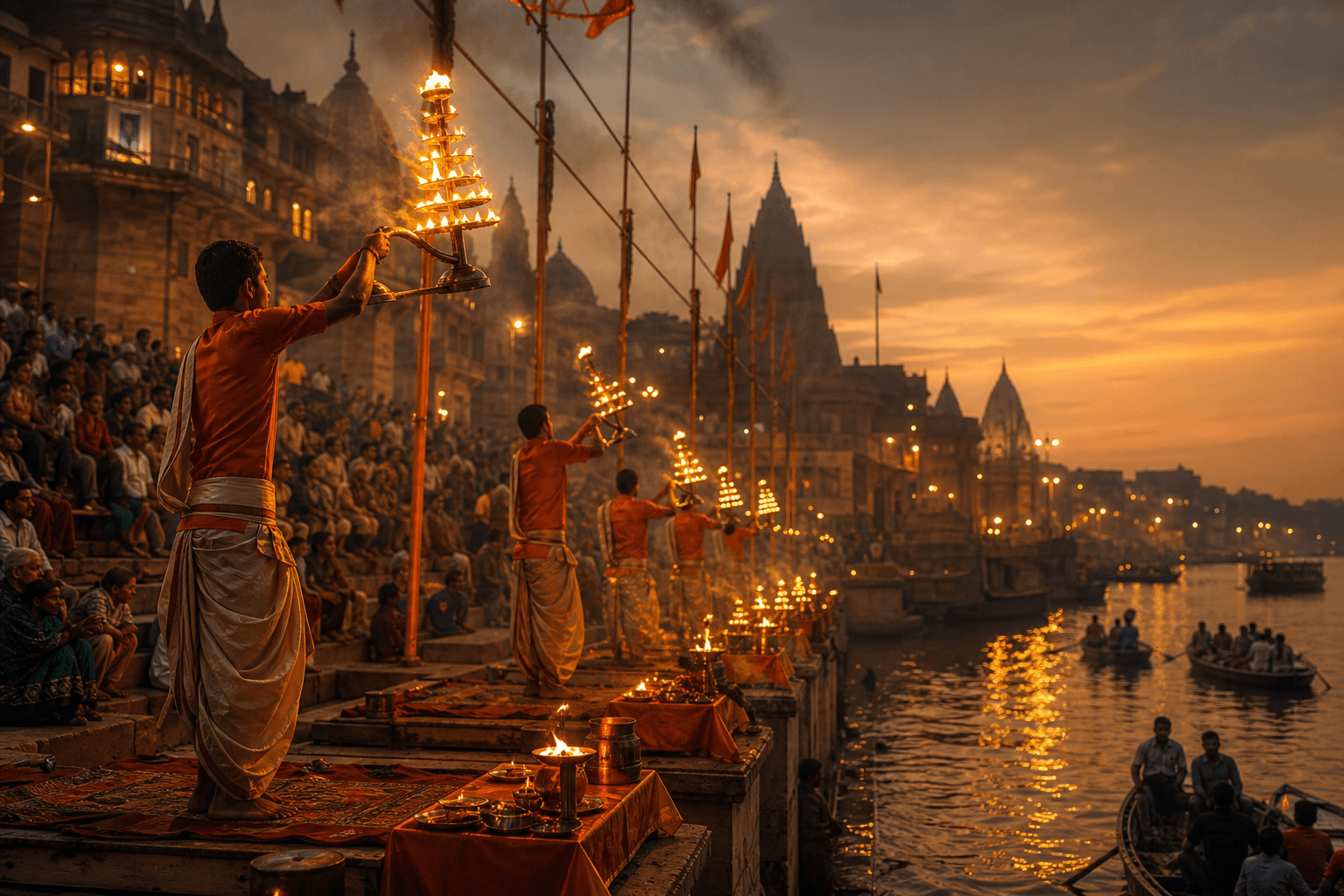
Explore →attractionThe main ghat for the famous evening Ganga aarti — brass lamps, conch shells, and the river at dusk.
Explore →