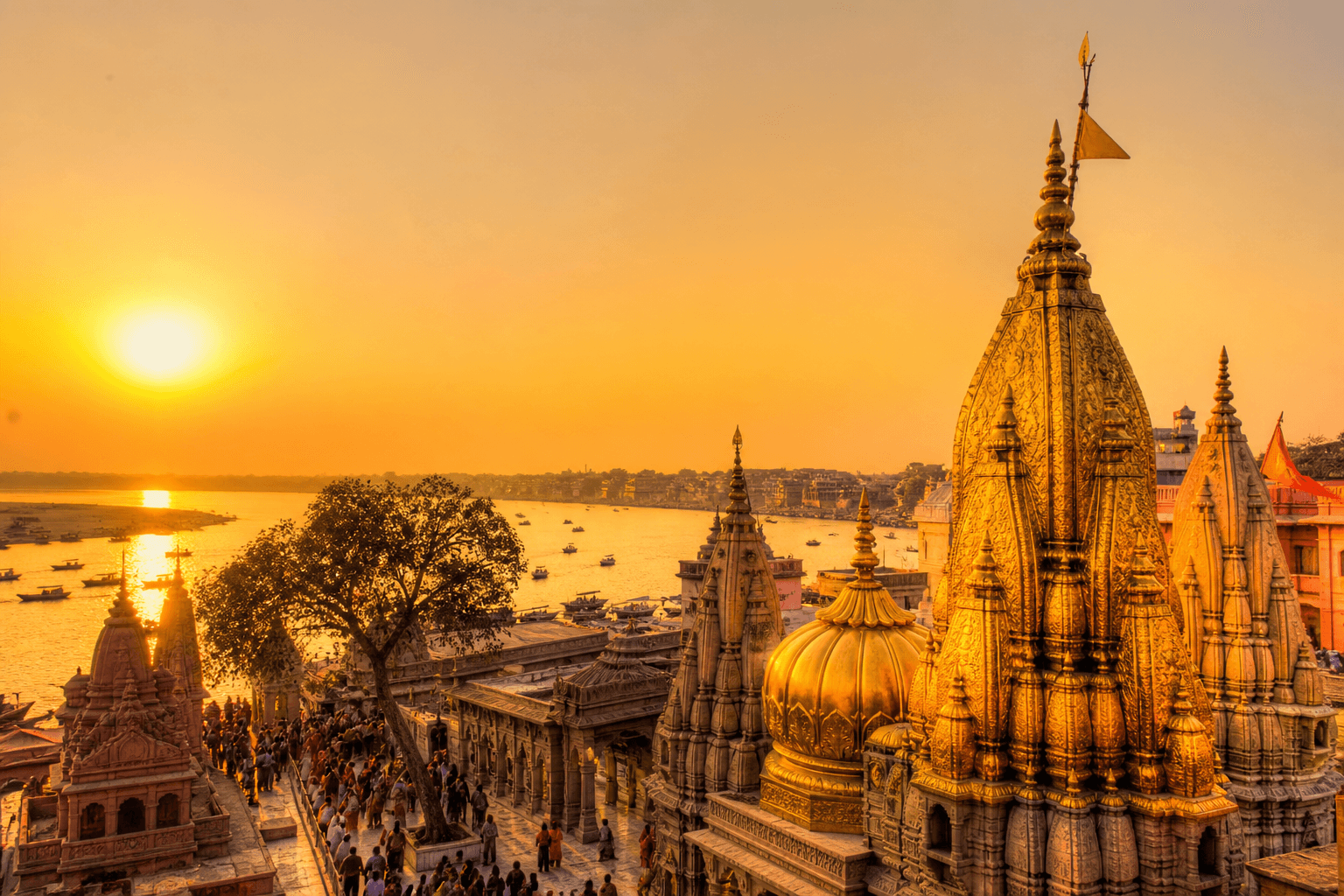
White marble walls inscribed with the Ramcharitmanas — where Tulsidas shaped the Ramayana for the Hindi-speaking world.
Where the Ramayana learned to speak Hindi
Tulsi Manas Temple honours Goswami Tulsidas, who rendered Valmiki's Sanskrit epic into the Ramcharitmanas — the version most of North India sings, recites, and weeps over. The white marble complex near Assi Ghat inscribes that text on its walls so you walk through poetry as much as architecture. Heritage here is literary: the building is twentieth century, but the voice inside it is four hundred years old.
The courtyard as open book
Panels line the cloister with verses in Devanagari script. Even if you do not read Hindi, the rhythm of couplets and the devotion of visitors who touch the stone suggest how text becomes temple. A small shrine to Rama, Sita, and Lakshman sits at the centre; Hanuman receives offerings at the entrance as in countless Banaras doorways. The mood is quieter than Kashi Vishwanath — more garden, less crush.
Tulsidas and the city of many faiths
Tulsidas also shaped how Kashi understands Shiva and Rama together — his lore places him near Kashi Vishwanath and along these southern lanes. Visiting Tulsi Manas after Sarnath's Buddhist calm or before an evening at Dashashwamedh Ghat shows how one city stacks narratives without resolving them into a single story.
Practical rhythm for your morning
Start at Assi for Subah-e-Banaras, walk here for mid-morning darshan, continue to Sankat Mochan Temple for Hanuman prasad if the queue allows. The three stops fit before lunch at Baati Chokha — a sensible arc for readers who want Kashi's sonic landscape, not only its fire.
Visitor tips
- Read the marble panels slowly — the Ramcharitmanas verses wrap the courtyard walls
- Combine with a morning walk at [Assi Ghat](/destinations/varanasi/attractions/assi-ghat) five minutes away
- Photography rules vary by section — ask attendants before filming inside the shrine
- Footwear must be removed; modest dress expected
Packages
Tours that include this stop
4 days · Showcase
Banarasi culture
Weaving houses, classical music evenings and old-city food walks.
View package →Visitor questions
The present marble temple was built in 1964 on the site traditionally associated with Tulsidas, who composed the Ramcharitmanas in Awadhi Hindi here in the sixteenth century.