
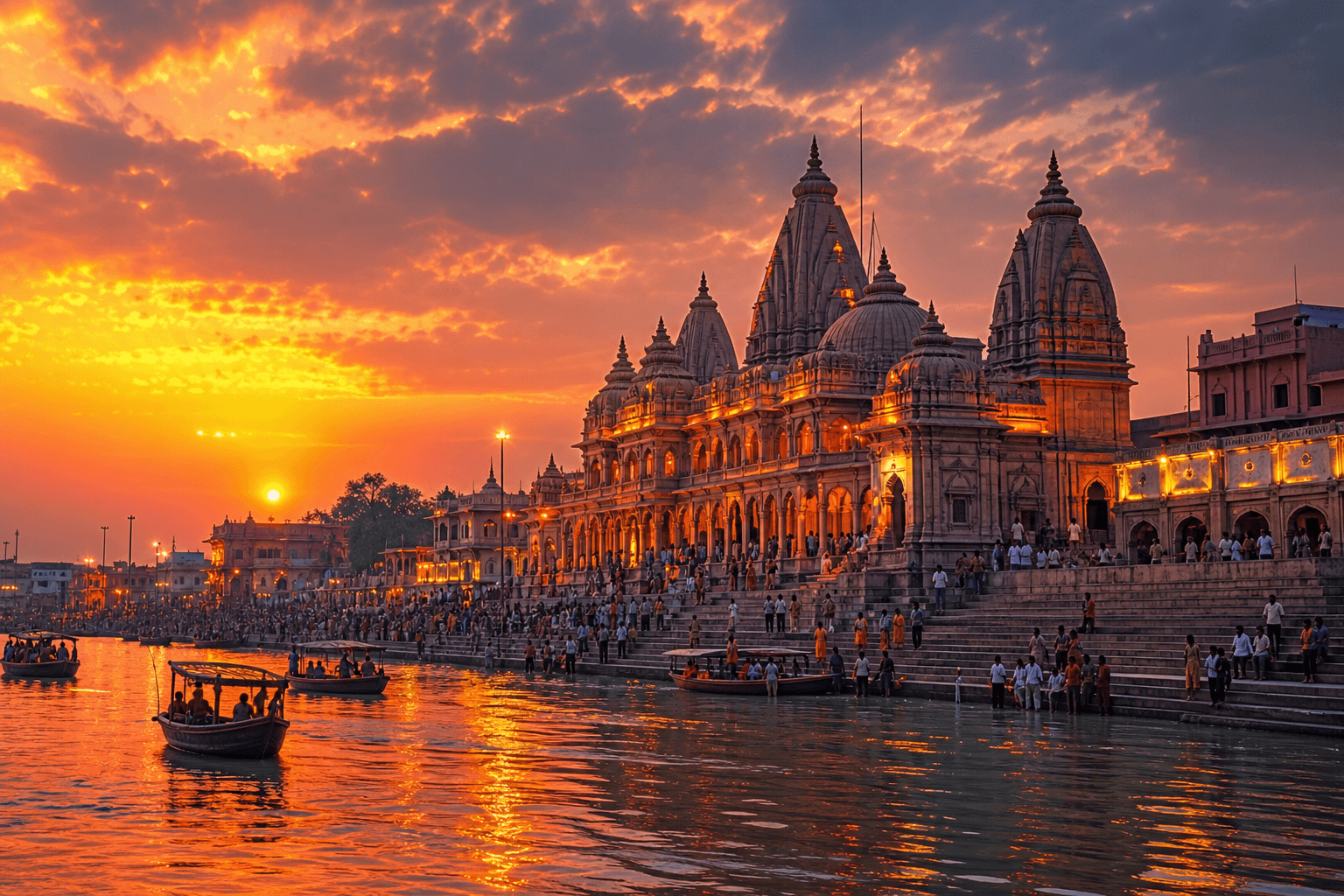
Sita's palace remembered — ornate halls where Ayodhya honours Janaki before and after the forest exile.
Janaki in stone
Janaki — Sita as daughter of Janaka — receives her own address in Ayodhya beside Rama's multiplying shrines. Janaki Mahal lets pilgrims honour the queen who chose exile over palace comfort, whose trial by fire theology still divides scholars and unites devotees. The banarasi pillar is epic femininity: courage staged as domestic virtue, palace rebuilt so no visitor forgets who stood beside Rama at the forest gate.
Architecture and ritual
Ornate facades, painted ceilings, inner shrines where darshan lines move quickly compared to Ram Mandir. Vivah Panchami celebrations re-enact wedding processions; ordinary days are calmer — better for studying mural detail and courtyard shade.
Walk the women's circuit
Janaki Mahal → Kanak Bhawan → Kanak Bhawan eateries for lane snacks → Tulsi Smarak for literature memory. Men and women both welcome; the narrative centre is Sita's agency, not gender segregation.
Evening handoff
Finish before Saryu evening aarti; palace courtyards close while ghats ignite. Float a diya via floating diyas experience if energy remains.
Visitor tips
- Pair with [Kanak Bhawan](/destinations/ayodhya/attractions/kanak-bhawan) — many pilgrims walk both in one afternoon
- Festival days (Sita Navami, Vivah Panchami) require patience in queues
- Shoes off at inner shrines; socks help on hot stone
- Guides link the site to Mithila marriage narrative — read before you go for depth
From the series
Films and upcoming schedules
Episode 7 · Coming soon
Birth of a Temple Town
A planned episode on Ayodhya's renewed skyline — Ram Mandir, Hanuman Garhi, and the Saryu at dusk.
Follow production →Visitor questions
No — Kanak Bhawan is a distinct temple to Rama-Sita; Janaki Mahal commemorates Sita's palace identity. They are walkable neighbours in the pilgrimage quarter.