
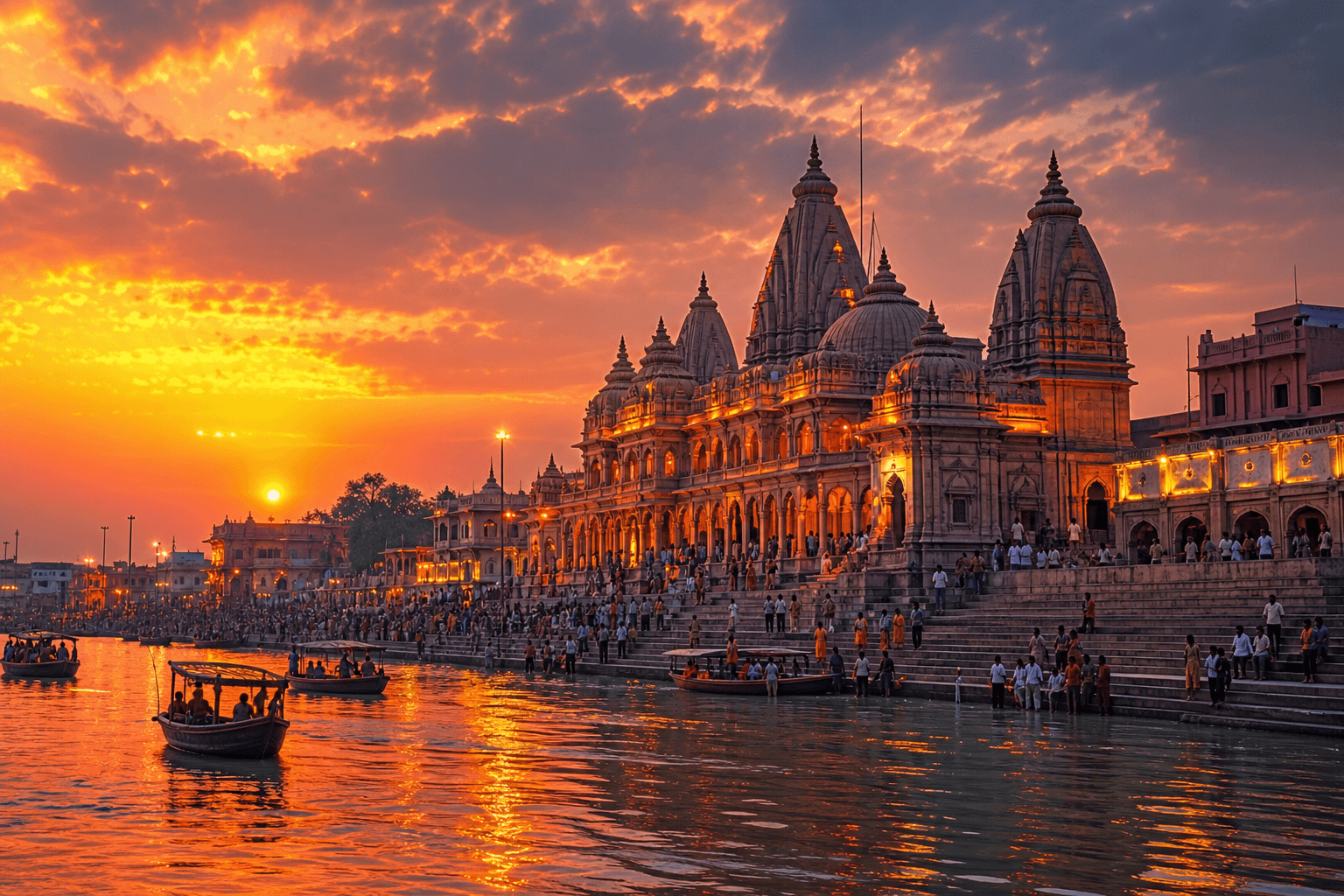
Broad stone steps to the Saryu — ritual bathing, evening lamps, and Ayodhya's river heartbeat.
The river that ends Ram's earthly story
The Saryu moves past Ayodhya with a steadiness that belies its mythic load. Tradition holds that Ram entered these waters at the close of his avatara; pilgrims still step down the same gradient of stone to rinse away sin, worry, or merely road dust. Ghat life here is intimate compared to Varanasi — fewer boats, more families thigh-deep at dawn, aunties wringing saris while teenagers film reels on phones. Moksh on the Saryu is tactile: cold water, folded hands, the murmur of mantras mixing with river sound.
Ghats stitched along the bank
Steps and landings extend for kilometres, not all equally maintained. The busiest clusters sit within rickshaw distance of Ram Mandir and the developed Ram Ki Paidi complex. Smaller pockets upstream and downstream offer quieter immersion if crowds unsettle you. After monsoon, water level rises and submerged algae make steps slick — test footing before committing weight.
Ritual rhythm through the day
Brahmins perform tarpan for ancestors at sunrise; women cluster mid-morning when temple rounds finish; evening belongs to lamps and song. The Saryu Evening Aarti concentrates fire and bell sound on a fixed platform, but informal offerings happen all along the bank — marigold rings floating beside plastic the municipality later nets away. Respect both devotion and ecology: carry offerings that dissolve or take wrappers back.
Visiting with care
Dress for wet stone and modesty. Lock valuables at your lodging; ghats are open but not guarded lockers. If you hire a boat, negotiate price and duration before boarding — short sunset floats are enough for photography without needing a long charter. Guptar Ghat downstream marks another chapter of Ram's departure; save it for a second morning if you want legend and geography aligned.
Close the pilgrimage loop
From Saryu Ghat walk or ride to Hanuman Garhi for hilltop darshan, or join a Ramayana Circuit Walk that strings shrines with riverside pauses. The city reads clearest when stone temple and flowing water share one day's itinerary.
Visitor tips
- Bathe only from designated steps — currents shift after monsoon; hold children's hands near the edge
- Evening aarti draws the largest crowds; arrive thirty minutes early for a clear view
- Pair a morning dip with [Ram Mandir](/destinations/ayodhya/attractions/ram-mandir-ayodhya) darshan when queues are shorter
- Photography is welcome on the steps; ask before filming individuals at prayer
From the series
Films and upcoming schedules
Episode 3
Saryu evening
Ayodhya after sunset — lamps on the ghats and the temple town renewed in devotion.
Watch the episode →Episode 7 · Coming soon
Birth of a Temple Town
A planned episode on Ayodhya's renewed skyline — Ram Mandir, Hanuman Garhi, and the Saryu at dusk.
Follow production →Field notes
Stories from this stop
Lamps on the Saryu
Evening aarti at Ram Ki Paidi — where the temple town gathers at the water's edge.
Read the story →Packages
Tours that include this stop
7 days · Showcase
Spiritual package
Ghat sunrise, temple darshan and guided ritual across the circuit.
View package →Visitor questions
Yes. Pilgrims enter the water from stone ghats for ritual bathing. Use modest swimwear or change behind towels; follow local custom at busy hours.