
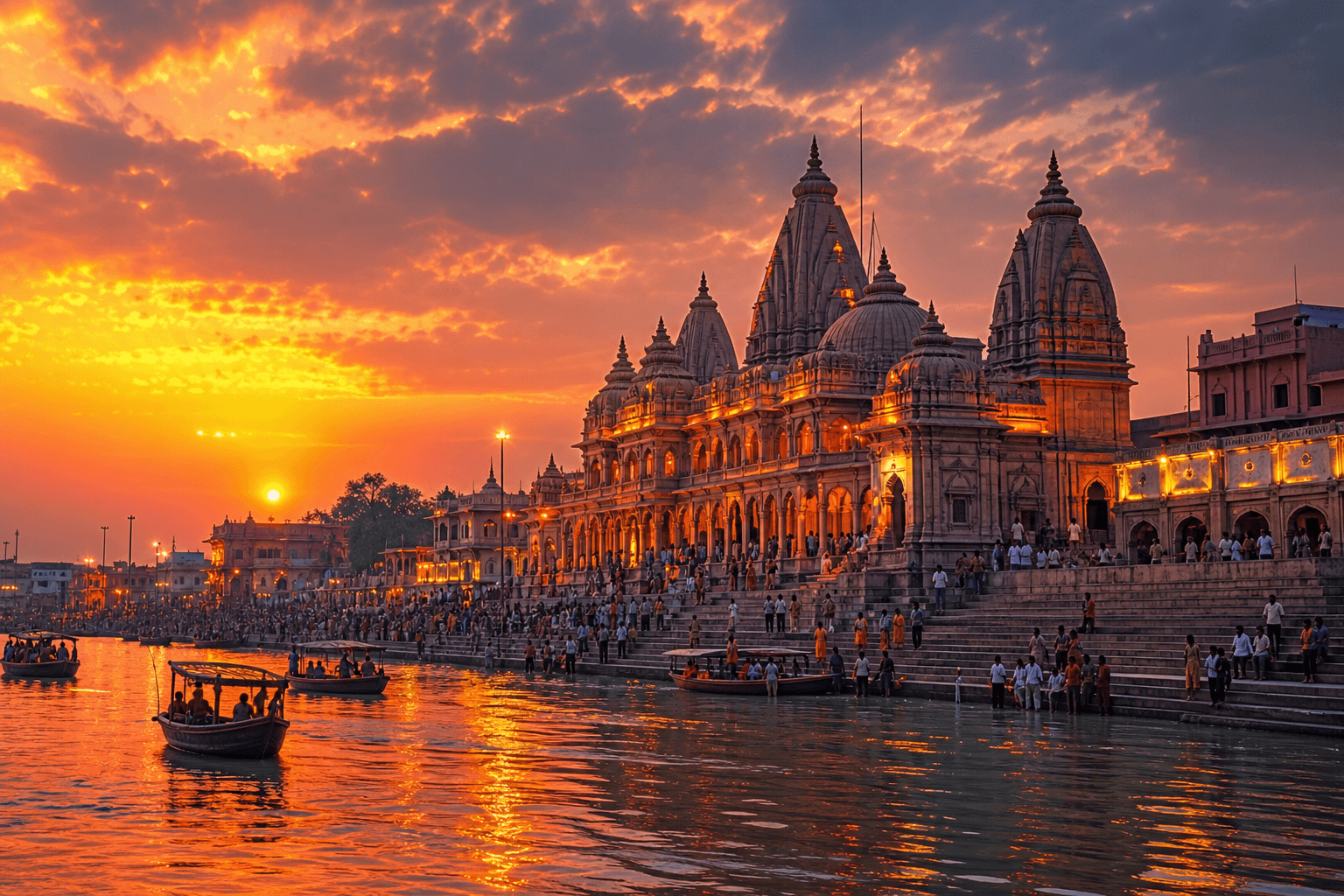
King's palace in the temple town — courtyards, Ramayana memory, and the royal seat Ayodhya rebuilt for pilgrims.
Palace memory in a mandir city
Dashrath Mahal names the father whose vow cost Rama fourteen years in exile — grief that defines Ayodhya's emotional archaeology. The complex on Ram Path offers courtyards where pilgrims imagine court life before the forest: thrones as shrine, murals as scripture, guides quoting Valmiki between selfie stops. Banarasi pillar here is narrative: architecture in service of epic, not only deity.
What you will see
Painted halls, small shrines to Rama's lineage, occasional cultural performances during festivals. Unlike the soaring Ram Mandir, Dashrath Mahal feels domestic — palace scale human enough to picture a father's regret.
Timing with darshan
Visit after Ram Mandir darshan journey when you still have myth fresh in mind. Morning Morya Mishthan → mandir → Dashrath Mahal afternoon → Kanak Bhawan evening.
Respect
This is living pilgrimage space, not museum theatre — quiet voices, modest dress, no drone flights over courtyards without permission.
Visitor tips
- Walk from [Ram Mandir](/destinations/ayodhya/attractions/ram-mandir-ayodhya) corridor — allow time between security queues
- Guides narrate Ramayana court scenes; verify official guide badges
- Photography rules vary by courtyard — respect no-camera zones
- Combine with [Ramayana circuit walk](/destinations/ayodhya/experiences/ramayana-circuit-walk) for full epic mapping
From the series
Films and upcoming schedules
Episode 3
Saryu evening
Ayodhya after sunset — lamps on the ghats and the temple town renewed in devotion.
Watch the episode →Episode 7 · Coming soon
Birth of a Temple Town
A planned episode on Ayodhya's renewed skyline — Ram Mandir, Hanuman Garhi, and the Saryu at dusk.
Follow production →Visitor questions
The structure is a memorial and pilgrimage palace evoking Ayodhya's royal past — built and renovated for devotional narrative rather than as an untouched archaeological ruin.