
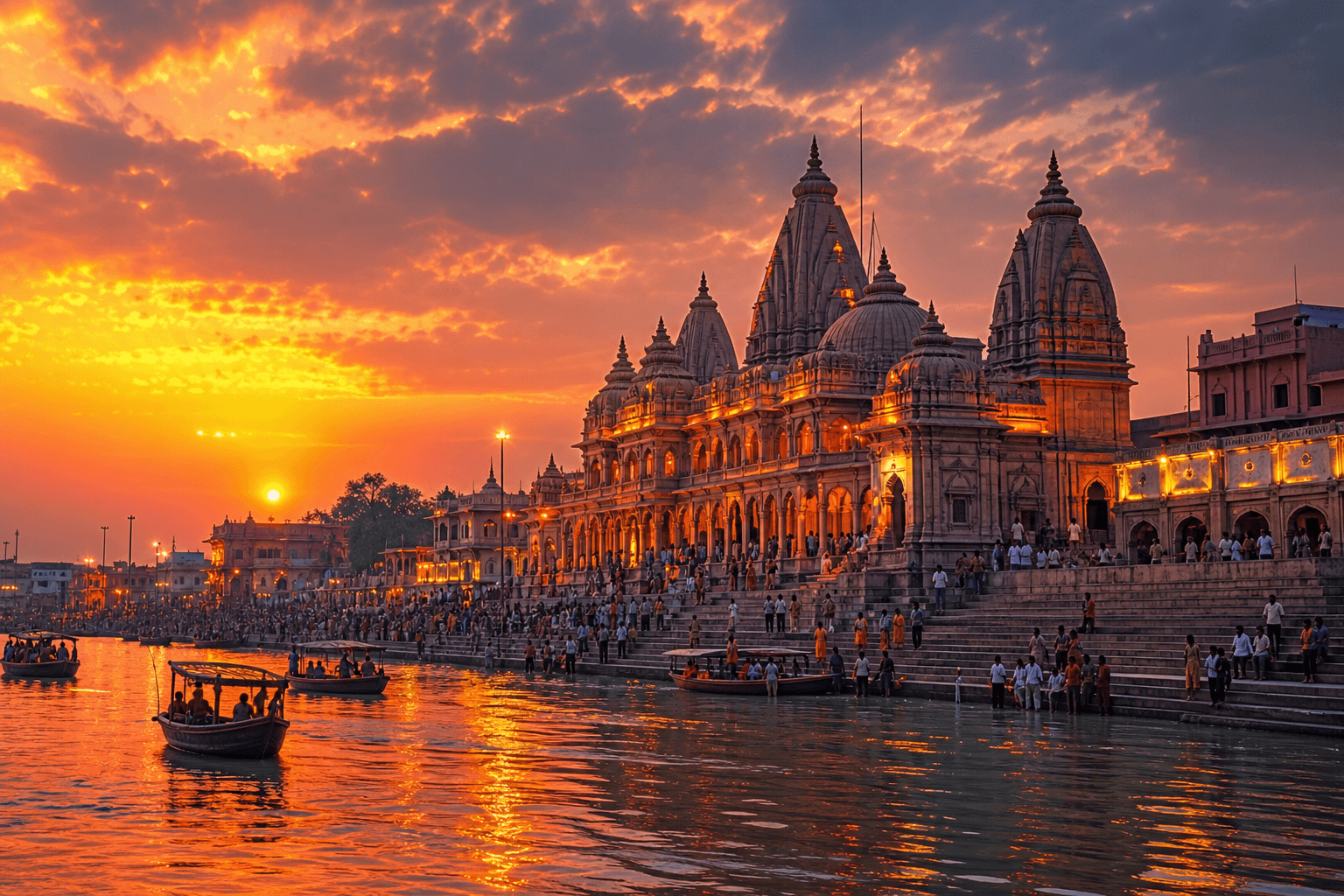
Offer a lamp to the river — clay diya, flame, and the collective constellation Ayodhya draws across Deepotsav and ordinary evenings.
Flame on moving water
To float a diya on the Saryu is to add one star to a river already full of stories. Pilgrims cup clay bowls, light cotton wicks, set them gently on the current — wish, prayer, or silence. During Deepotsav, millions of lamps turn Ram ki Paidi into horizon fire; on ordinary evenings the ritual is intimate, sometimes lonely, still valid.
How to participate
Purchase biodegradable diyas on the ghat. Light from shared flames or your own match; shield wind with your hand. Step down only where steps are dry; ghat staff often coordinate rows during festivals so currents do not pile lamps against bathers.
Pair with aarti
Float lamps after Saryu evening aarti when priests finish brass choreography and the crowd exhales. Walk from Hanuman Garhi downhill as sky darkens. Buy peda at Shri Ram Bhandar earlier — sweetness before you give flame away.
Visitor tips
- Buy clay diyas and cotton wicks from licensed stalls — avoid plastic floats
- Light only after aarti instructions if participating in organised Deepotsav rows
- Supervise children near steps; current can pull shallow floats faster than expected
- Our episode Saryu Evening frames this ritual as the city's signature night image
From the series
Films and upcoming schedules
Episode 3
Saryu evening
Ayodhya after sunset — lamps on the ghats and the temple town renewed in devotion.
Watch the episode →Visitor questions
Usually around Diwali with massive coordinated lamp displays — dates shift yearly; check Uttar Pradesh tourism calendars before booking travel.