
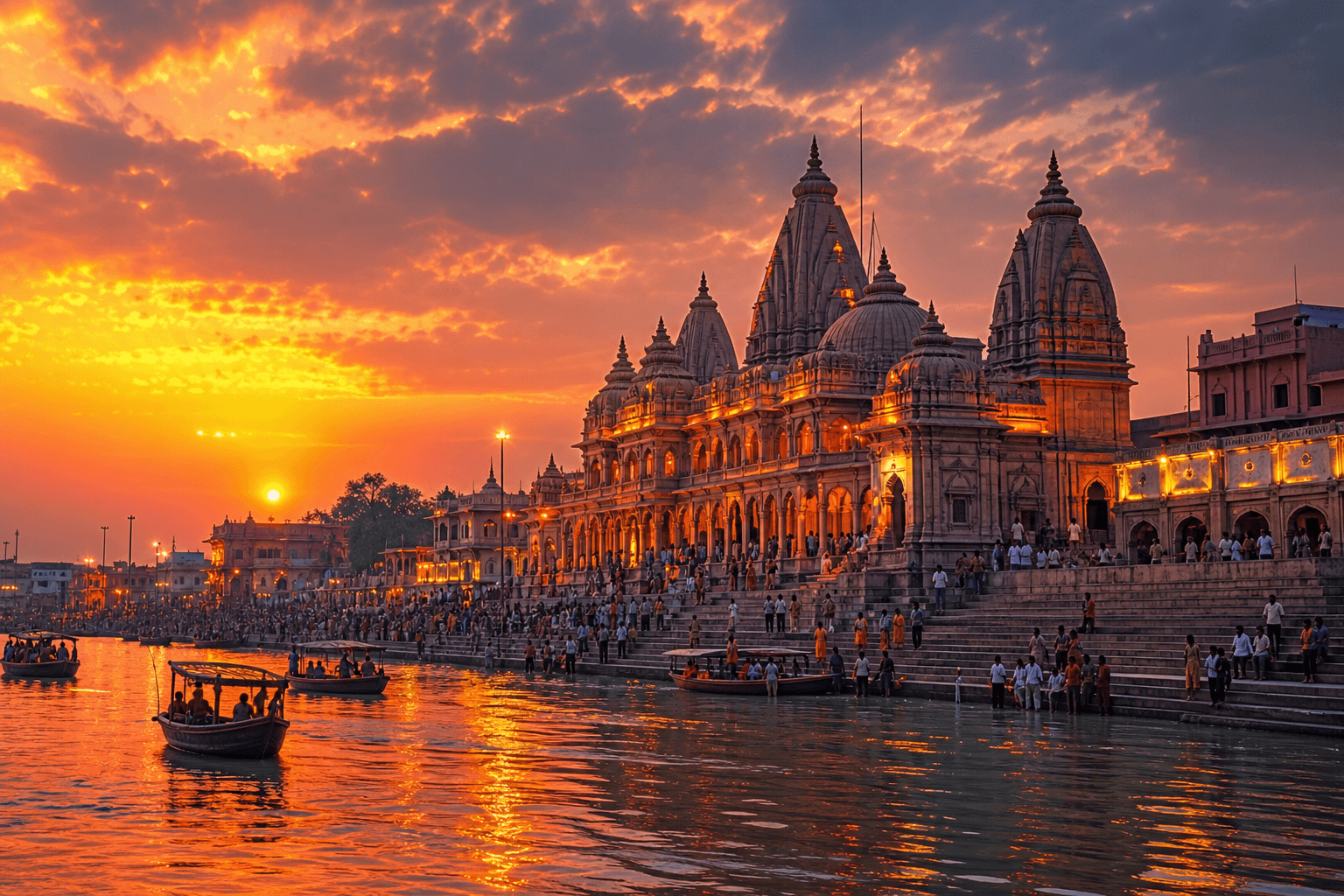
Memorial to Tulsidas — manuscripts, recitation hall, and the poet who made Ram Ayodhya's spoken tongue.
Where the epic learned to speak Awadhi
Tulsi Smarak Bhawan honours the poet who translated Ram from Sanskrit courts to marketplace Hindi — the Ramcharitmanas that grandmothers still sing in fragments. Banarasi pillar mapping fits: this is literary craft as sacred infrastructure, the same Gangetic culture that produced Banaras's bhakti poets and silk weavers. The building is modern memorial architecture — clean halls, portraits, glass cases — but the sound that matters is voice: evening recitations where lines everyone half-knows suddenly sharpen into call-and-response devotion.
Tulsidas and Ayodhya's modern memory
Tulsidas lived when Ayodhya's temple landscape differed from today's skyline, yet his verses fixed the city in North Indian imagination as Ram's capital. Legends place him visiting shrines you still walk — Hanuman Garhi, riverside ghats, hills now built over. The smarak (memorial) collects that biography: timelines, illustrated manuscripts, audio clips if exhibits are powered on. Scholars linger; pilgrims pause to connect book learning with stone darshan completed earlier in the day.
Programmes and quiet corners
Ram Katha Park next door hosts larger outdoor storytelling events; the bhawan hosts smaller seminars and daily path readings. Festival weeks add crowds — plan midweek mornings for reflective browsing. Staff sometimes guide school groups; join at the back if a docent-led tour is in English or Hindi. Courtyard benches suit note-taking or simply resting feet after Ram Mandir queues.
Practical visit
Modest dress; voices low near recitation halls. Bags may be screened lightly. Combine with sweets from Shri Ram Bhandar and an afternoon at Kanak Bhawan to balance literature with living altar.
Extend the heritage walk
Link to Mani Parvat if you want another site Tulsidas lore touches, or ride to Saryu Ghat hearing manas verses in your head while the river catches sunset.
Visitor tips
- Attend evening Ramcharitmanas recitation if your visit coincides — check the day's board at reception
- Pair with [Shri Ram Bhandar](/destinations/ayodhya/restaurants/shri-ram-bhandar) peda nearby for a cultural-food loop
- Photography may be restricted in manuscript galleries — ask before shooting glass cases
- Allow an hour if you read Hindi or Awadhi; thirty minutes suffices for architecture and courtyard
Visitor questions
A sixteenth-century poet-saint who composed the Ramcharitmanas in Awadhi, making Ram's story accessible across North India and deeply shaping Ayodhya's devotional culture.