
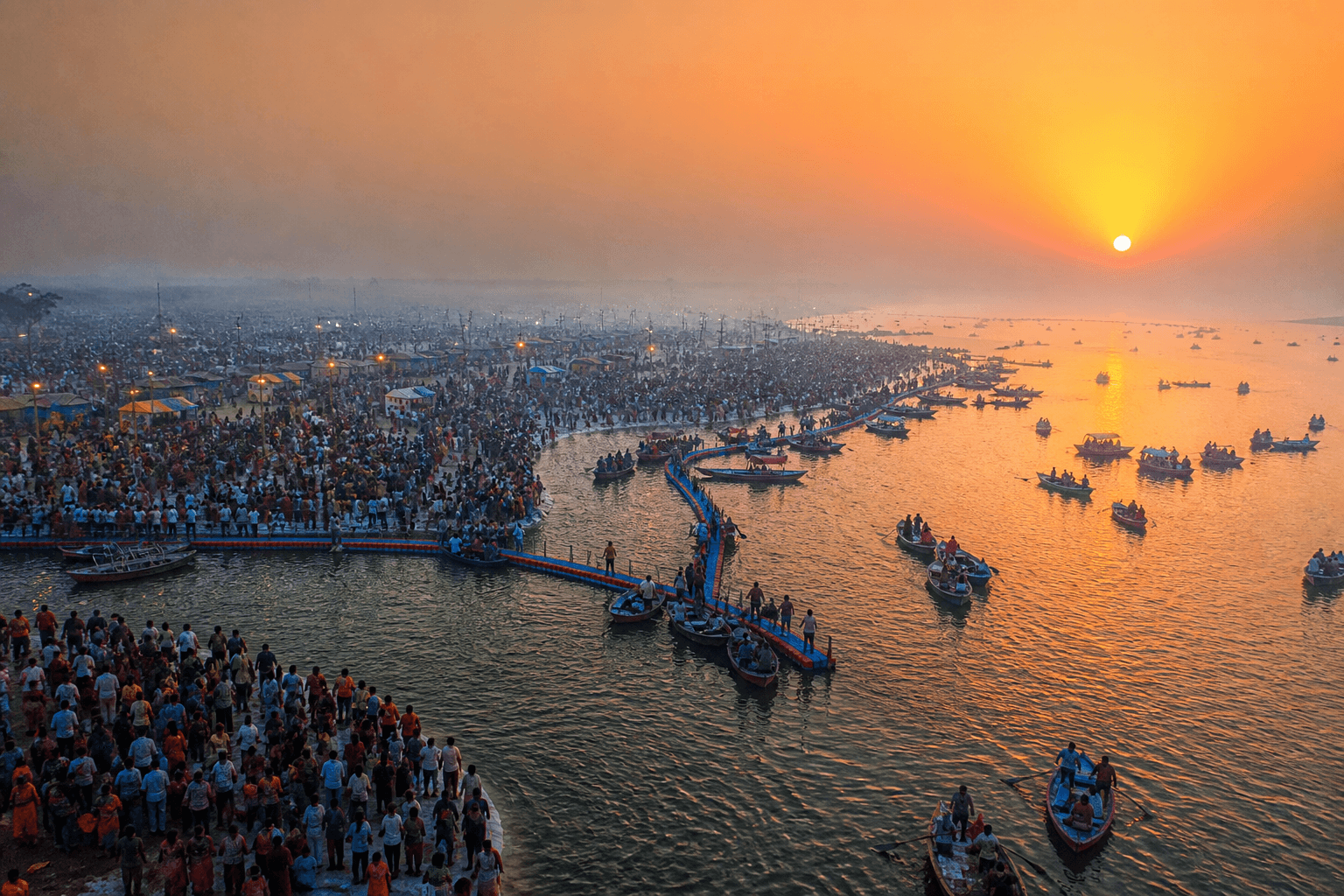
Guided walk through Kumbh history — akhara stories, sangam mythology, and the city Prayagraj becomes every twelve years.
The city that appears and vanishes
Every twelve years Prayagraj doubles in population without building new permanent streets. The Kumbh Mela is a city of tents, akharas, and bathing sectors laid over floodplain and ghat — then dismantled when the rivers rise. A heritage walk makes that invisible architecture legible even in a quiet month. You learn where Naga sadhus camp, how snan routes are zoned, and why the sangam's mythology made emperors and ascetics compete for the same bank.
Stories the riverfront still tells
Guides trace the amrit legend that links Prayagraj to the rotating Kumbh circuit. You pass ghats rebuilt after monsoon damage, markers for planetary alignments that set the main bathing day, and lanes that become highways of faith during Magh Mela. The walk connects ritual geography to lived memory — grandparents who met here, families who return every generation.
When to go and what to bring
Winter mornings suit walking; summer afternoons on open sand are punishing. Carry water, a hat, and curiosity about sects you may only read about otherwise. Respect sadhus and pilgrims — ask before photographing distinctive ascetics.
After the walk
Descend to Triveni Sangam for boats or a holy dip. Afternoon heritage shifts to Allahabad Fort or Khusro Bagh in Civil Lines for Mughal gardens away from the current.
Visitor tips
- Book guides with tourism department registration or reputable operators — avoid unofficial touts at the ghat
- Wear walking shoes; riverfront paths are uneven and sun-exposed
- Magh Mela season (winter) lets you see temporary camp layouts even outside the full Kumbh year
- End near [Triveni Sangam](/destinations/prayagraj/attractions/triveni-sangam) if you want to add a dip or boat ride
From the series
Films and upcoming schedules
Episode 2
Sangam at dawn
Prayagraj at first light — boats, holy dip and the confluence where three rivers meet.
Watch the episode →Visitor questions
Yes. Guides explain permanent sites and the temporary city that appears during Magh Mela and Kumbh — akhara grounds, bathing sectors, and mythological markers along the ghats.