
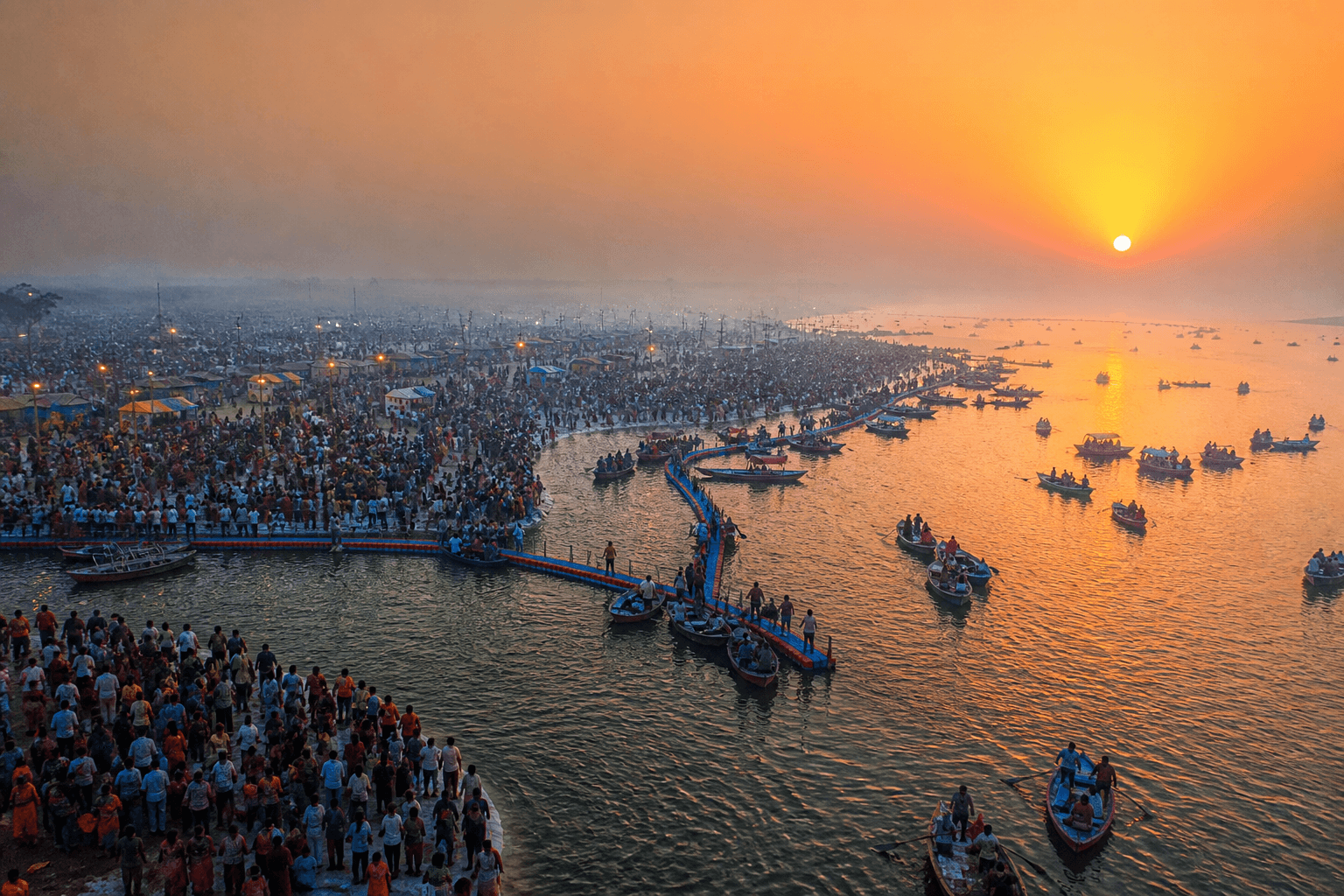
Where Ganga, Yamuna, and the hidden Saraswati meet — Prayagraj's sacred heart and Kumbh ground zero.
Three rivers, one shoreline of belief
Prayagraj exists because rivers agreed to meet here. The Ganga arrives from the east carrying Himalayan silt; the Yamuna slides in from the south with a greener, quieter current. Beneath both, tradition holds that the Saraswati flows underground — invisible but essential to the name Triveni, the triple braid. For pilgrims on the moksh circuit, this is not scenery. It is geography shaped into prayer.
We film the sangam at first light, when mist still sits on the water and the colour line between rivers reads like ink on wet paper. That is the hour when the city feels oldest.
Why this confluence commands the Kumbh
Hindu cosmology places Prayagraj among the holiest tirthas — crossing places where merit accumulates and liberation draws nearer. The Kumbh Mela rotates between four cities; when it comes here, millions camp along these banks. Even in a quiet year, the infrastructure of faith remains: ghats rebuilt after each flood, boatmen who know the exact GPS of sanctity, priests who guide first-time bathers through mantras and offerings.
The ritual is simple in outline and deep in intention. You descend the steps, enter the current, submerge three times if tradition allows, and release flowers or lamps. What changes is scale — a family at dawn, a city at Kumbh.
What happens on the ghats today
Arail and the surrounding bathing ghats hum from before sunrise. Vendors sell diya, marigold garlands, and cotton towels. Boatmen call out fares in Hindi and broken English. The Hanuman Mandir near the water draws devotees who stop for darshan before or after the dip. Above the tree line, the ramparts of Allahabad Fort remind you that emperors also wanted this view.
If you prefer structure, book a Sangam holy dip experience with a guide who handles boat passage and explains the sequence respectfully.
Visiting with clarity and care
Dress for water and sun. Lockers are limited — travel light. Do not argue on the steps; agree prices away from the crowd. Photography of bathers should be discreet; many people treat this as private worship. After bathing, warm chai on the bank is part of the rhythm for locals and visitors alike.
Extend your Prayagraj day
Pair the sangam with the fort's Akshayavat tree and the reclining Hanuman at Bade Hanuman Mandir. In the afternoon, shift to Civil Lines for Anand Bhavan — river faith in the morning, independence history by tea time.
Visitor tips
- Arrive before sunrise for the calmest boats and the clearest view of the two rivers' colours meeting
- Agree on boat fare and whether the trip includes the exact confluence point before you board
- Keep valuables dry and wear modest clothing you can change out of after bathing
- During Kumbh and major snans, expect heavy crowds — plan extra travel time from the city
- Book a [Sangam boat crossing](/destinations/prayagraj/experiences/sangam-boat-crossing) to reach the confluence sandbar; pair fort afternoon with [Patalpuri Temple](/destinations/prayagraj/attractions/patalpuri-temple)
From the series
Films and upcoming schedules
Episode 2
Sangam at dawn
Prayagraj at first light — boats, holy dip and the confluence where three rivers meet.
Watch the episode →Episode 6 · Coming soon
Confluence of Faith
A planned episode on Prayagraj beyond the sangam — fort walls, Nehru's home, and the city Kumbh built.
Follow production →Field notes
Stories from this stop
Sand at the sangam
Prayagraj during Kumbh season — faith measured in millions of footsteps.
Read the story →Packages
Tours that include this stop
7 days · Showcase
Spiritual package
Ghat sunrise, temple darshan and guided ritual across the circuit.
View package →Visitor questions
Yes. From a boat at the confluence, the pale green Yamuna and the silt-brown Ganga run side by side before blending. Pilgrims consider the invisible Saraswati the third current beneath them.